
Industrial Minerals
Limestone
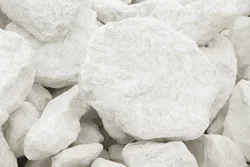
Limestone is a sedimentary rock composed mainly of calcium carbonate (CaCO₃). Supplied as lumps, granules and powder, it serves construction, agriculture, industry and art — from road base and concrete aggregate to lime for cement, glass and fertilizer.
Limestone Powder Applications
Steel Production
Used as a flux to remove impurities from molten iron and steel and to form recyclable slag.
Plastic & Rubber
A filler that improves the strength, durability and appearance of plastic and rubber products.
Construction Materials
A binder for cement, mortar and concrete, and a base for lime plaster that protects walls and ceilings.
Water Treatment
Neutralises acidity, removes impurities and helps prevent corrosion and scaling in pipes.
Paper Production
Whitens paper and improves its smoothness and opacity.
Paints & Pigments
A filler and extender for paints and pigments across a range of colours.
Animal Health
A dietary calcium and mineral supplement for horses, cattle and poultry.
Available Sizes
Ready to get started?
Let’s talk about creating your competitive advantage.
Frequently Asked Questions
What is Limestone and what is it used for?
Can Mada Trade Co. export Limestone internationally?
What packaging and minimum order quantities are available for Limestone?
How do I request a sample or price quotation for Limestone?