
Premium Finishes & Flooring
Egyptian Stone Cladding
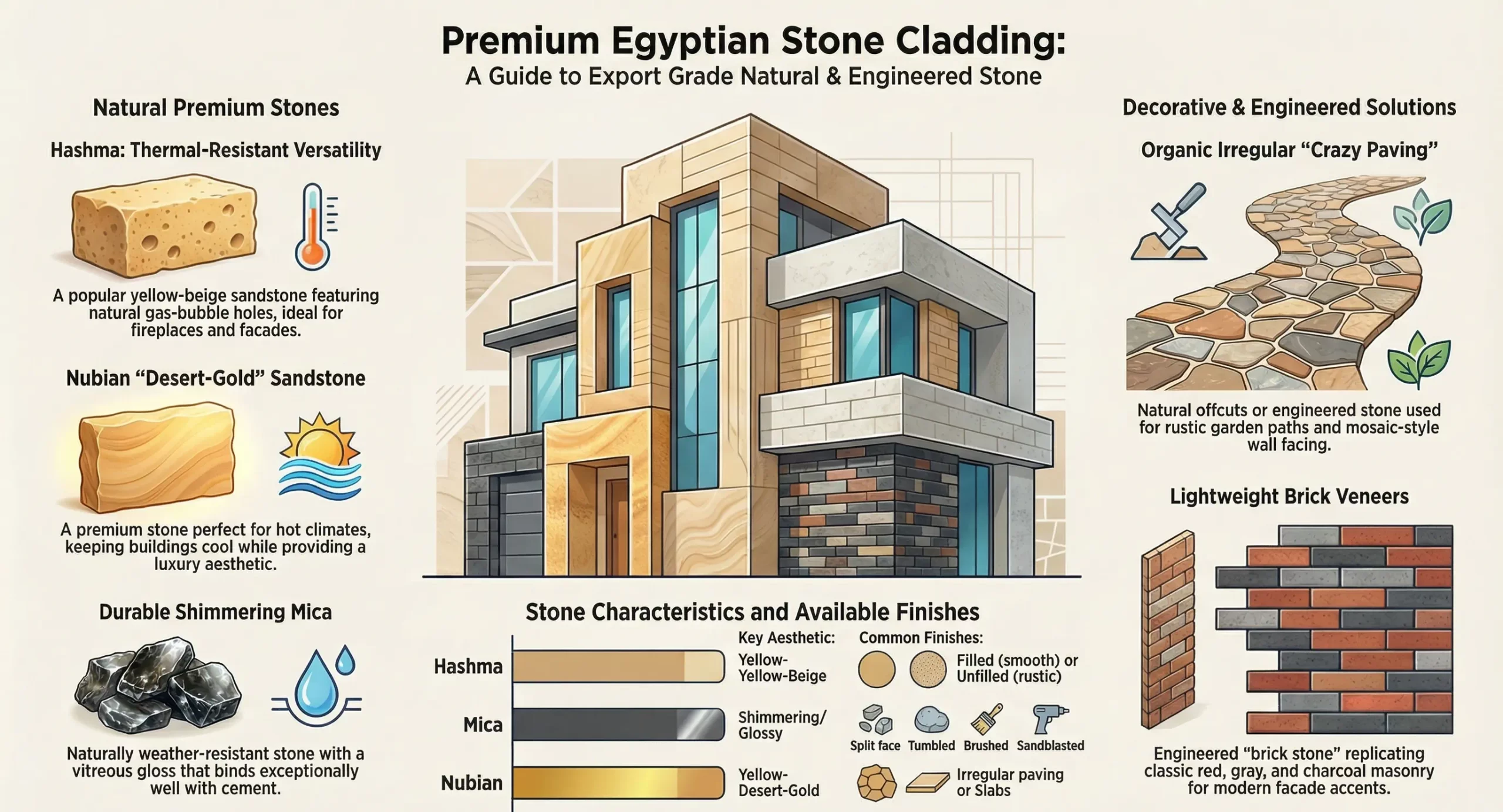
Premium Egyptian natural stone cladding — Hashma and Nubian sandstone, Mica stone, irregular “crazy” paving and brick-stone veneers — quarried and finished for elegant, durable facades, landscaping and feature walls.
Stone Types

Hashma Stone
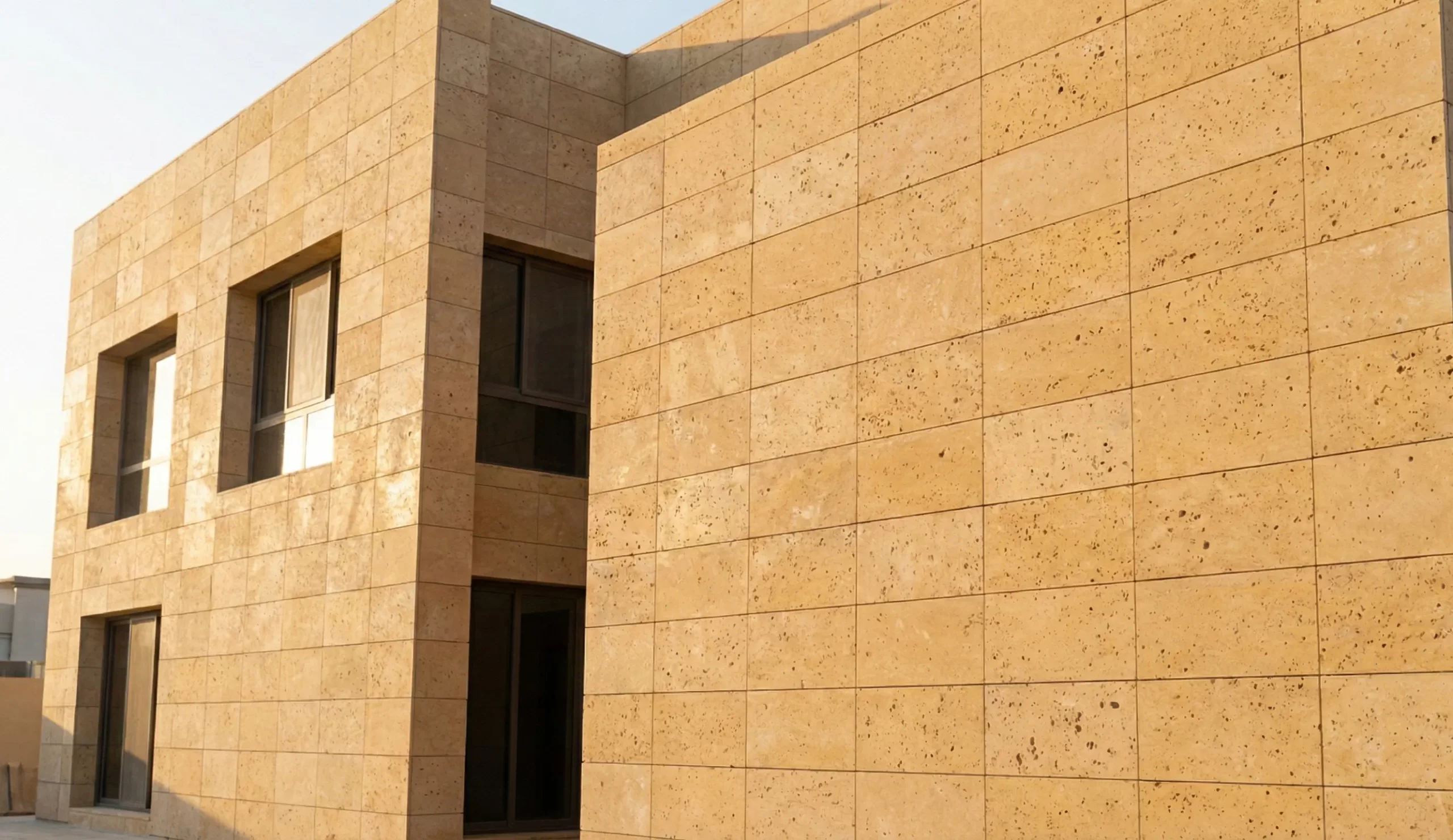
The most popular Egyptian sandstone for export — a yellow-beige stone with tiny natural holes that can be left rustic or filled for a smoother finish. Highly thermal-resistant, ideal for fireplaces, exterior cladding, landscaping and fences.

Nubian Sandstone
A premium natural cladding stone whose thermal resistance suits hot climates, keeping buildings cool with a “desert-gold” aesthetic. Used for exterior cladding and as irregular paving or Nubian slabs for high-end gardens.

Mica Stone
A durable sedimentary rock of quartz and mineral layers with a shimmering, vitreous gloss. Tough, weather- and corrosion-resistant with low water absorption. Finishes: split-face, tumbled, brushed and sandblasted.

Irregular Stone
Stones cut or left in organic, non-uniform shapes — natural “crazy paving” from Hashma, limestone or marble offcuts, and lightweight cultured veneers moulded to mimic natural rock.

Brick & Stone Cladding
Lightweight cultured brick-stone veneers (red, grey, off-white, charcoal) for accent walls and facades, plus pre-cut natural panels of Hashma, marble (Galala, Sinai Pearl) and granite for dry mechanical cladding.
Ready to get started?
Let’s talk about creating your competitive advantage.
Frequently Asked Questions
What is Egyptian Stone Cladding and what is it used for?
Can Mada Trade Co. export Egyptian Stone Cladding internationally?
What packaging and minimum order quantities are available for Egyptian Stone Cladding?
How do I request a sample or price quotation for Egyptian Stone Cladding?